
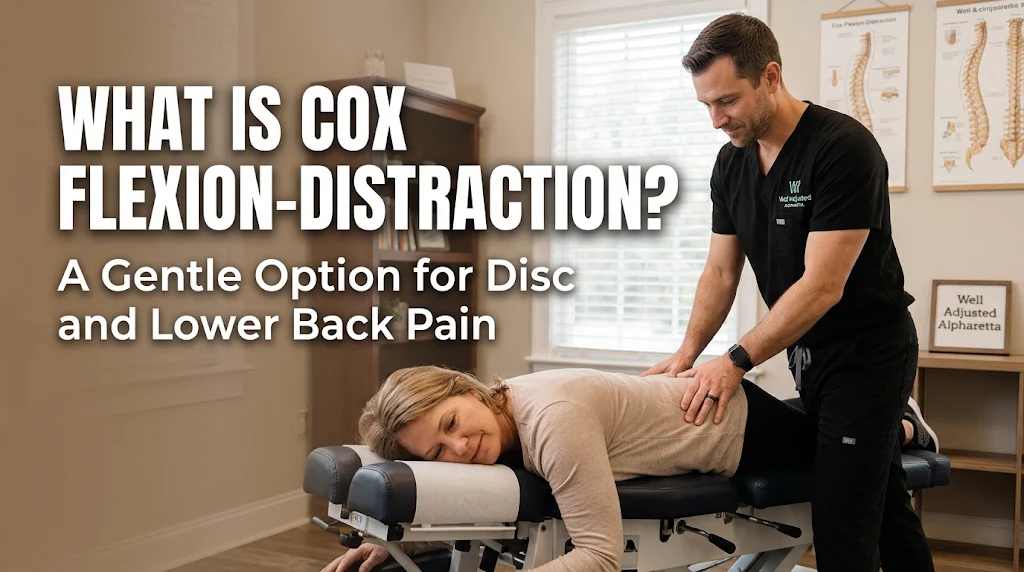
If you’ve ever had a sharp ache in your lower back, pain that travels down your leg, or stiffness that doesn’t ease with rest, you know how much it can disrupt your day. Many people with back pain want relief but feel nervous about treatments that involve twisting or forceful movements. That’s where Cox Flexion-Distraction comes in.
Cox Flexion-Distraction is a gentle, hands-on chiropractic technique often used for disc-related back pain. Here’s what it is, how it works, and who may benefit from it.
What Is Cox Flexion-Distraction?
Cox Flexion-Distraction is a form of spinal manipulation that uses a specialized table to gently stretch and move the spine. It was developed by Dr. James Cox, a chiropractor, and is also called flexion-distraction therapy.
The name describes the two movements involved:
- Flexion: a gentle bending motion of the spine.
- Distraction: a gentle pulling or stretching motion that creates space between the vertebrae.
The table is built in sections. The doctor can move the lower part of the table in a slow, rhythmic motion while the patient lies comfortably face down, applying light, controlled pressure with their hands.
How Does It Work?
Between each vertebra in your spine is a disc, a soft cushion that absorbs shock and allows movement. When a disc becomes irritated, bulges, or herniates, it can press on nearby nerves and cause pain, tingling, or weakness.
The gentle stretching motion of Cox Flexion-Distraction is designed to:
- Create space between the vertebrae, which may reduce pressure on irritated discs and nerves.
- Encourage movement in stiff joints of the lower back.
- Relax tight muscles around the spine.
- Improve mobility so you can move with less discomfort.
Because the technique uses slow, rhythmic movements rather than quick thrusts, many patients find it comfortable and relaxing.
What Conditions Is It Used For?
Cox Flexion-Distraction is commonly used for:
- Lower back pain: from strain, stiffness, or joint irritation.
- Bulging or herniated discs: where a disc pushes outward and irritates nearby nerves.
- Sciatica: pain, numbness, or tingling that travels from the lower back through the hip and down the leg. You can learn more in our guide to what sciatica is, its causes, and relief options.
- Spinal stenosis: a narrowing of the spaces in the spine that can put pressure on nerves.
- Facet joint irritation: pain from the small joints at the back of the spine.
- Neck pain and stiffness: some practitioners also use modified versions of the technique for the neck.
Every person is different, so a proper evaluation is the first step in finding out whether this technique fits your condition.
How Is It Different From a Traditional Chiropractic Adjustment?
A traditional adjustment typically uses a quick, controlled thrust to move a joint, and you may hear a popping sound. Flexion-distraction works differently:
| Traditional Adjustment | Cox Flexion-Distraction | |
| Movement | Quick, controlled thrust | Slow, rhythmic stretching |
| Feel | Brief pressure, sometimes a “pop” | Gentle, flowing motion |
| Positioning | Often lying on your side or back | Lying face down on a special table |
| Common use | Joint restriction, stiffness | Disc-related pain, nerve irritation, back pain |
Neither approach is better for everyone. Many chiropractors use both, depending on your symptoms and comfort level. If you’re curious about how adjustments fit into an ongoing care plan, see our post on how often you should get a chiropractic adjustment.
What Happens During a Cox Flexion-Distraction Session?
A typical visit looks like this:
- Evaluation: Your chiropractor reviews your health history, asks about your symptoms, and performs a physical exam to understand what’s causing your pain.
- Positioning: You lie face down on the specialized table, fully clothed and comfortable.
- Treatment: The doctor gently moves the table in a slow, rhythmic pattern while applying light hand pressure to the affected area of your spine.
- Additional care: Depending on your needs, your visit may also include other supportive therapies, such as soft tissue work or guided exercises.
Sessions are usually relatively short, and most patients describe the experience as gentle and even relaxing.
Who May Be a Good Candidate?
Cox Flexion-Distraction may be a good option if you:
- Have lower back pain that hasn’t improved with rest
- Have been told you have a bulging or herniated disc
- Experience leg pain, numbness, or tingling linked to your back
- Prefer a low-force approach without twisting or sudden movements
- Want a non-surgical, drug-free option to discuss with your provider
It may not be appropriate for everyone. Certain conditions, such as severe or progressive nerve problems, some fractures, or other medical concerns, may require different care or a referral. That’s why a thorough exam comes first.
Can It Be Combined With Other Care?
Yes. Many patients find that the best results come from a well-rounded plan. Your chiropractor may combine flexion-distraction with:
- Therapeutic exercises to strengthen the muscles that support your spine
- Graston Technique to address tight or restricted soft tissue
- Cupping therapy to relax muscles and support circulation
- Lifestyle guidance on posture, movement, and daily habits
When Should You See a Chiropractor?
Consider booking an evaluation if your back pain:
- Lasts more than a few days without improving
- Keeps coming back
- Spreads into your hip, buttock, or leg
- Comes with tingling or numbness
- Makes it hard to sit, stand, sleep, or work
Seek urgent medical care if your back pain comes with loss of bladder or bowel control, numbness in the groin or inner thighs, sudden severe weakness in a leg, or follows a serious fall or accident.
Frequently Asked Questions
Is Cox Flexion-Distraction safe?
It is generally considered a gentle, low-force technique. Your chiropractor will first evaluate your condition to make sure it’s appropriate for you. As with any care, results and suitability vary from person to person.
Does Cox Flexion-Distraction hurt?
Most patients find it comfortable. You may feel a light stretch in your lower back, and some people notice mild soreness afterward, similar to what you might feel after light exercise. Tell your chiropractor if anything feels uncomfortable.
How many sessions will I need?
It depends on your condition, how long you’ve had symptoms, and how your body responds. Your chiropractor will outline a care plan after your evaluation and adjust it as you progress.
Can it help with a herniated or bulging disc?
It is commonly used for disc-related back pain, and many patients seek it as a non-surgical option. Whether it’s right for you depends on your imaging, symptoms, and exam findings, so a professional evaluation is important.
Can it help with sciatica?
Sciatica is often linked to irritation of a nerve in the lower back, and flexion-distraction is frequently part of care plans for it. See our posts on chiropractic care for sciatica for more.
Do I need a referral or imaging first?
Not always. Your chiropractor will decide during your exam whether imaging or a referral is needed.
Is it covered by insurance?
Coverage varies by plan. Our team can help you understand your options when you call.
Find Gentle Relief at Well Adjusted Alpharetta
You don’t have to live with ongoing back pain or wait for it to get worse. If you’re in Alpharetta, Roswell, or the surrounding area and want to know whether Cox Flexion-Distraction could help, our team at Well Adjusted Alpharetta is here to listen, evaluate, and build a care plan around your needs.
Learn more about our Cox Flexion-Distraction care or call us today to schedule your visit.
This article is for general educational purposes and is not a substitute for professional medical advice, diagnosis, or treatment. Individual results vary.