
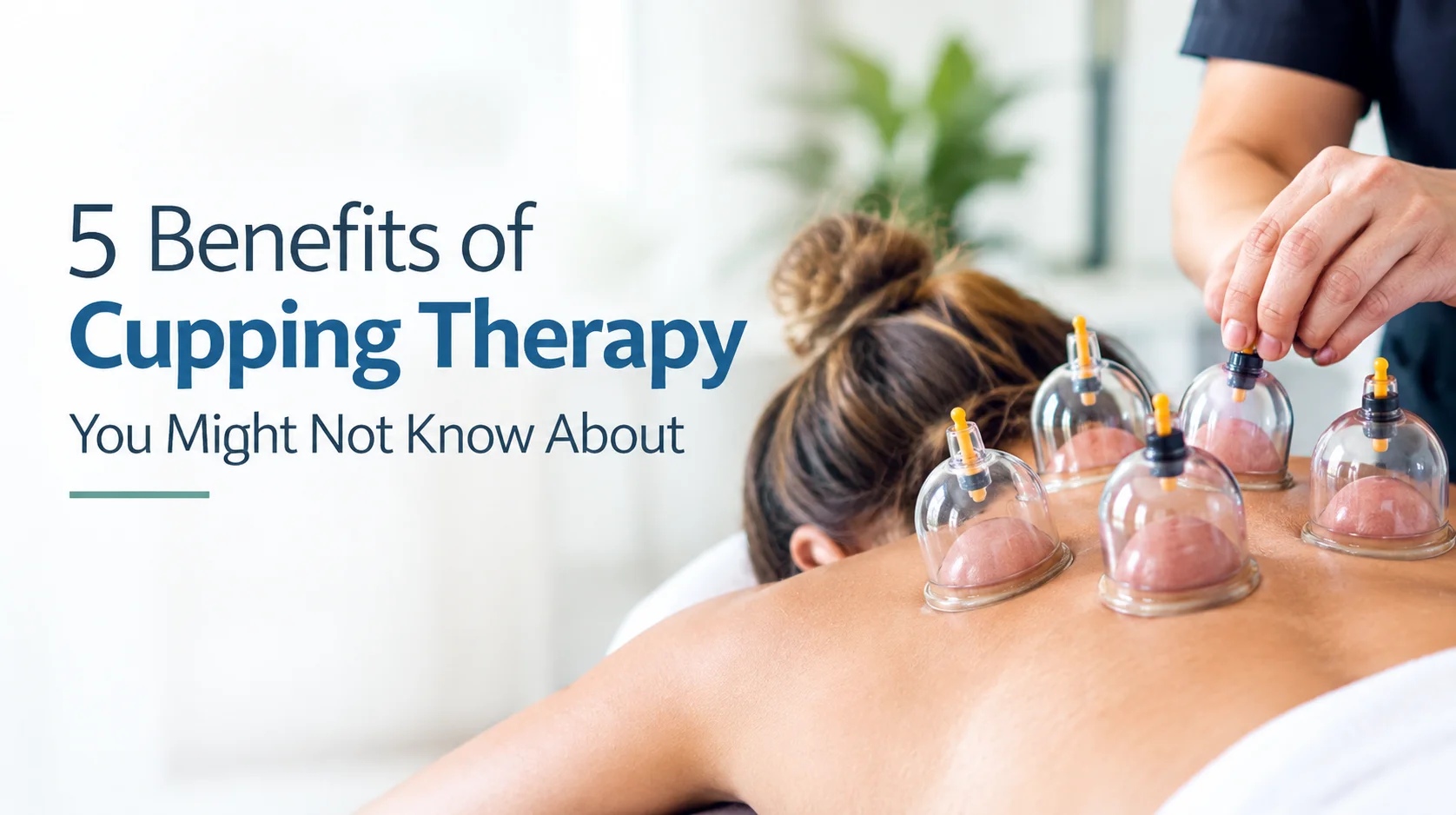
You’ve probably seen the marks before — round, reddish circles on the shoulders or back of an athlete, gymnast, or swimmer. That’s the telltale sign of cupping therapy, a treatment that’s grown from an ancient healing practice into a mainstream recovery tool used by physical therapists, chiropractors, and athletic trainers alike.
But beyond the distinctive marks, what is cupping actually doing — and is it worth trying? Here’s a closer look at the real benefits, backed by what current research and clinical use actually show.
How Cupping Therapy Works
Unlike massage, which presses down into muscle tissue, cupping does the opposite. Specialized cups are placed on the skin to create gentle suction, lifting the skin and underlying tissue upward rather than compressing it. This negative pressure separates the skin from the fascia — the thin connective tissue surrounding your muscles — and is believed to stimulate circulation and support the body’s natural repair process.
The circular marks people associate with cupping come from small, temporary capillary changes just beneath the skin. They typically fade within a week or two and aren’t true bruises in the sense of injured muscle tissue.
1. Improved Circulation
This is the most well-supported benefit of cupping. The suction effect increases local blood flow to the treated area, which may help deliver oxygen and nutrients to tissues more efficiently while supporting the removal of metabolic waste. Some researchers point to increased nitric oxide release as a possible mechanism behind this improved blood flow — though the exact science is still being studied.
2. Reduced Muscle Tension
Because cupping lifts and stretches tissue in the opposite direction of typical muscle tightness, it can help release tension that’s built up from overuse, poor posture, or intense physical activity. Many patients report a noticeable loosening sensation in the treated area, particularly around the back, shoulders, and neck.
3. Faster Recovery After Exercise
Athletes frequently use cupping as part of a post-workout recovery routine. A randomized controlled trial on female professional soccer players found that cupping significantly improved hip joint range of motion and reduced pain — supporting its use as a recovery tool for active individuals. Another study found that dynamic cupping increased hamstring mobility and improved perceived relief in high-level athletes.
4. Increased Range of Motion
By releasing tightness in muscles and the surrounding fascia, cupping can help improve flexibility and joint mobility. This makes it a popular complement to stretching routines, physical therapy, and chiropractic care — especially for people dealing with stiffness that limits their normal range of movement.
5. A Non-Invasive Complement to Other Care
One of cupping’s biggest advantages is how well it works alongside other treatments. It’s commonly paired with chiropractic adjustments, physical therapy, or the Graston Technique as part of a broader recovery plan — addressing soft tissue tension while other therapies target joint alignment or deeper scar tissue.
A Note on the Research
It’s worth being upfront: while cupping has a long history of use and many patients report real benefits, some medical researchers note that high-quality clinical evidence is still developing, and cupping shouldn’t be viewed as a cure-all. Where it tends to perform best is as a supportive, complementary therapy — helping with circulation, tension, and recovery — rather than a standalone treatment for serious or complex conditions.
Is Cupping Right for You?
Cupping therapy is generally considered a low-risk, well-tolerated treatment, and can be a great option if you’re dealing with muscle tightness, recovering from an intense workout, or simply looking for another tool to support your overall wellness routine. As with any treatment, it’s worth discussing your specific situation with a provider to determine whether cupping — on its own or alongside other therapies — makes sense for your goals.
Curious whether cupping therapy could help with tension, recovery, or mobility? Learn more about our Cupping Therapy services or call us today to schedule a consultation.