

Neck and shoulder tension is one of the most common issues people experience today, especially with long hours spent at desks, on phones, or working on computers. Poor posture, stress, and repetitive movements can all contribute to tight muscles and discomfort in the upper body.
The good news is that simple daily stretches can help relieve tension, improve mobility, and prevent pain from getting worse. In fact, regular stretching has been shown to reduce neck and shoulder pain and improve overall function when performed consistently.
Below are five effective stretches you can do at home or at work to relieve neck and shoulder tension.
Why Do Neck and Shoulder Muscles Get Tight?
Neck and shoulder tension often develops due to modern lifestyle habits. Sitting for long periods, especially with poor posture, places stress on the cervical spine and surrounding muscles. Over time, this can lead to stiffness, reduced mobility, and even chronic pain.
Stress is another major factor. When you’re stressed, your body naturally tightens the muscles in your shoulders and upper back. This constant tension can lead to discomfort and trigger points.
If tension becomes persistent, it may also be related to spinal alignment issues. In such cases, treatments like chiropractic adjustments can help address the root cause rather than just the symptoms.
1. Neck Side Stretch (Upper Trapezius Stretch)
The neck side stretch targets the upper trapezius muscle, which is one of the most common areas of tightness.
Sit or stand upright and gently tilt your head toward one shoulder. Use your hand to apply light pressure for a deeper stretch, but avoid pulling too hard. Hold for 20–30 seconds, then switch sides.
This stretch helps reduce stiffness and improve flexibility in the neck. It is especially helpful for people who spend long hours working at a desk.
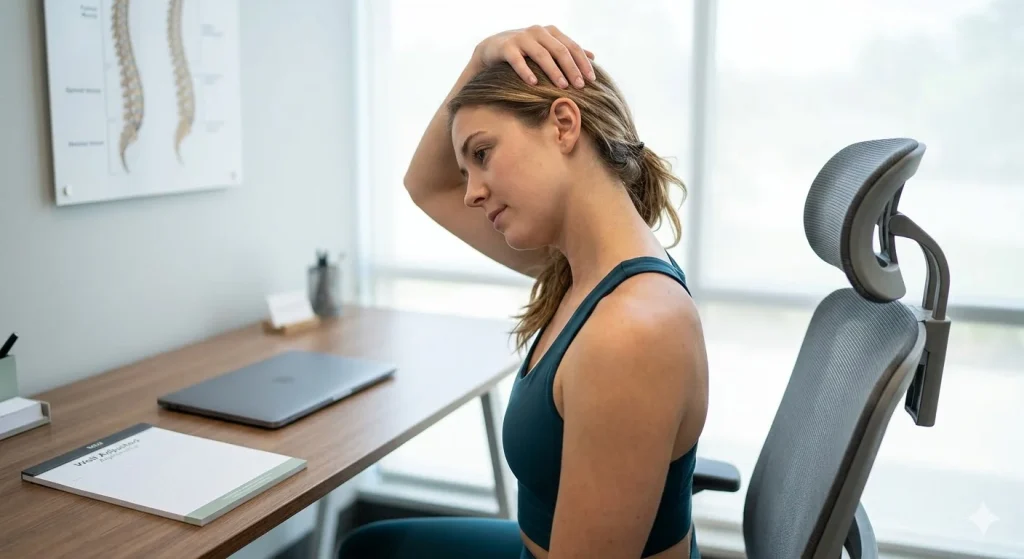
2. Levator Scapulae Stretch
This stretch targets the muscle that connects your neck to your shoulder blade, which often becomes tight due to poor posture.
Sit upright and turn your head about 45 degrees to one side. Then gently bring your chin down toward your chest. Use your hand to apply light pressure for a deeper stretch. Hold for 20–30 seconds and repeat on the other side.
This stretch is highly effective for relieving tension caused by “tech neck” or prolonged screen use.
3. Shoulder Rolls
Shoulder rolls are a simple but effective way to release tension and improve circulation in the upper body.
Lift your shoulders up toward your ears, then roll them backward in a circular motion. Repeat 10–15 times, then reverse the direction.
This movement helps loosen tight muscles and improve mobility. It can also reduce stiffness that builds up throughout the day.
4. Chest Opener Stretch
Tight chest muscles can pull your shoulders forward, contributing to neck and upper back tension.
Stand tall and clasp your hands behind your back. Gently lift your arms while opening your chest and pulling your shoulders back. Hold for 20–30 seconds.
This stretch helps correct posture and reduces strain on the neck and shoulders. It is especially useful for people who sit for long periods.
5. Upper Back & Shoulder Blade Squeeze
This stretch strengthens and activates the muscles that support proper posture.
Sit or stand upright and gently squeeze your shoulder blades together as if trying to hold a pencil between them. Hold for 5 seconds and repeat 10–15 times.
Improving muscle activation in this area helps reduce tension and prevents recurring tightness.
For long-term improvement, combining stretches with therapeutic exercises can help strengthen weak muscles and improve posture.
When Stretches Alone Are Not Enough
While stretching is highly effective, it may not fully resolve the issue if the underlying cause is structural or nerve-related.
If you experience:
- Persistent pain
- Muscle spasms
- Limited range of motion
- Pain radiating into the arms
It may indicate deeper issues such as spinal misalignment or nerve irritation.
In these cases, treatments like:
can help address the root cause and provide longer-lasting relief.
Tips to Prevent Neck & Shoulder Tension
Preventing tension is just as important as relieving it. Simple daily habits can make a big difference.
Maintain proper posture when sitting or standing, keep your screen at eye level, and take breaks every 30–60 minutes to move and stretch. Staying active and strengthening your upper body muscles can also reduce strain.
Consistency is key. Even a few minutes of stretching each day can significantly improve comfort and mobility over time.
Final Thoughts
Neck and shoulder tension is a common issue, but it doesn’t have to become a long-term problem. Simple stretches, when done consistently, can relieve tightness, improve flexibility, and support better posture.
However, if your symptoms persist or worsen, it’s important to address the underlying cause. Combining stretching with professional care can provide more effective and lasting results.
If you’re dealing with ongoing discomfort, we can help create a personalized treatment plan to restore movement and reduce pain.